Rivers in the Sea: How Ocean Currents Shape Climate, Life and Trade
Look at the sea from a beach and it seems to go nowhere. Yet beneath that surface runs a system of vast, permanent flows — rivers in the sea, some carrying more water than every land river combined. These currents move heat, nutrients and life around the planet, and without them Earth's climate would be unrecognizable.
The great conveyor belt
The slowest and mightiest circulation is driven not by wind but by density. In the cold North Atlantic, salty surface water chills, grows heavy and sinks, creeping south along the deep ocean floor; centuries later it resurfaces in other oceans, warms, and drifts back. Scientists call this loop the thermohaline circulation — the global conveyor belt. One complete circuit can take around a thousand years, and it quietly redistributes heat between hemispheres.
Gyres: the five great wheels
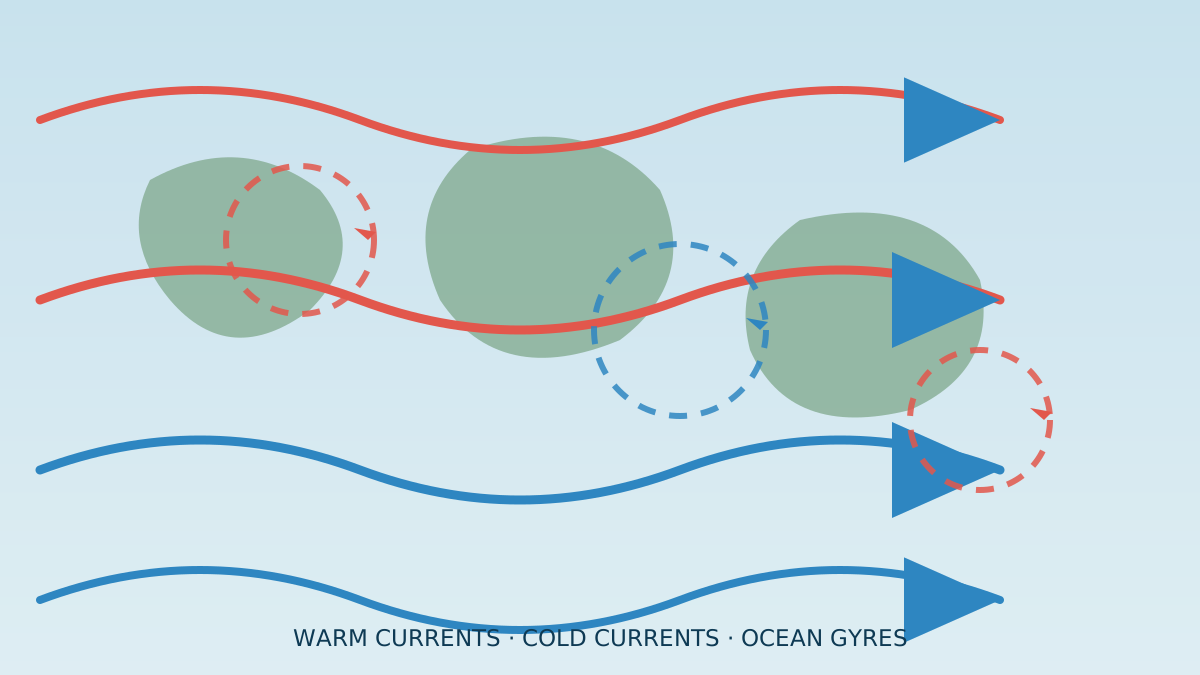
At the surface, steady winds and Earth's rotation spin the water of each ocean basin into enormous rotating systems called gyres — five major ones, each thousands of kilometers across. Their edges form the named currents of the map: the Gulf Stream, the Kuroshio, the Benguela. A drifting bottle dropped into a gyre may circle an entire ocean, which is also why floating debris collects in their calm centers.
Currents as climate machines
Water stores far more heat than air, so currents are the planet's heating pipes. The Gulf Stream and its extensions deliver tropical warmth toward northwestern Europe, softening winters at latitudes that are frozen elsewhere. Cold currents do the opposite, cooling and drying nearby coasts — the same latitude can hold rainforest on one shore and desert on the other, decided largely by the water offshore.
Life rides the current
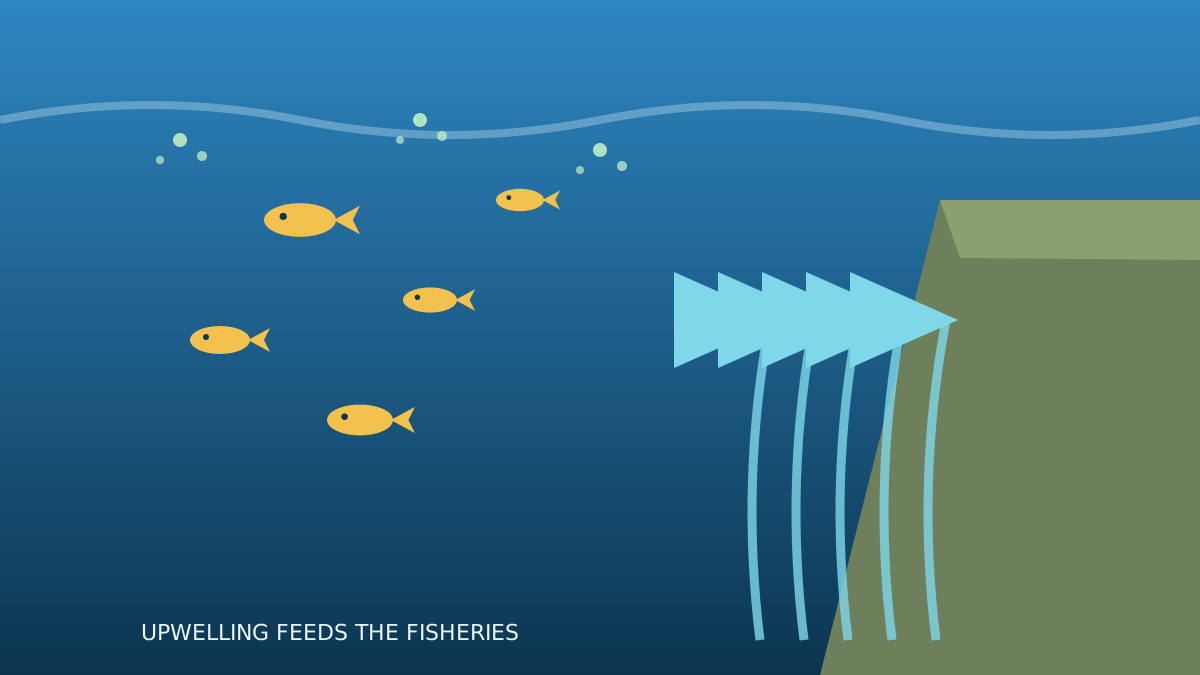
Currents are also the ocean's food distribution system. Where winds push surface water away from a coast, cold deep water rises in its place — upwelling — hauling nutrients into the sunlight. Plankton bloom, fish gather, seabirds and fishing fleets follow: a handful of upwelling zones supply a remarkable share of the world's wild-caught fish. Larvae, turtles and great migrations all use currents as highways.
Why it matters now
Because so much depends on this machinery, scientists watch it closely. A warming climate changes the temperature and saltiness that drive deep circulation, and even gradual shifts in major currents would reshape rainfall, fisheries and coastal weather worldwide. Understanding the rivers in the sea is not academic curiosity — it is reading the control room of the climate.
Conclusion
The ocean is never still. Its currents connect every coast to every other, carry the heat that makes continents livable, and feed the smallest plankton and the largest fisheries alike. Learn to see them, and the flat blue horizon becomes what it truly is: the engine room of the planet.
Frequently Asked Questions
What causes ocean currents?
Wind drives surface currents, while differences in water temperature and salinity drive deep circulation. Earth's rotation bends these flows into the great gyres, and continents steer them along coasts.
What is the Gulf Stream?
A powerful warm current carrying tropical Atlantic water northward along North America and toward Europe, moderating winters on both sides of the ocean.
What is upwelling?
The rise of cold, nutrient-rich deep water to the surface, usually where winds push surface water away from a coast. Upwelling zones feed plankton blooms and some of the world's richest fisheries.
Do ocean currents affect the weather?
Constantly. Currents move enormous amounts of heat, shaping rainfall, storm paths and temperatures far inland — shifts in currents can change climate patterns across whole continents.