Tides Explained: Why the Sea Rises and Falls Twice a Day
Twice a day, on most coasts, the sea quietly rises and then abandons the shore again. It is the most reliable spectacle in nature — and it is caused by objects hundreds of thousands of kilometers away.
Two bulges, one planet
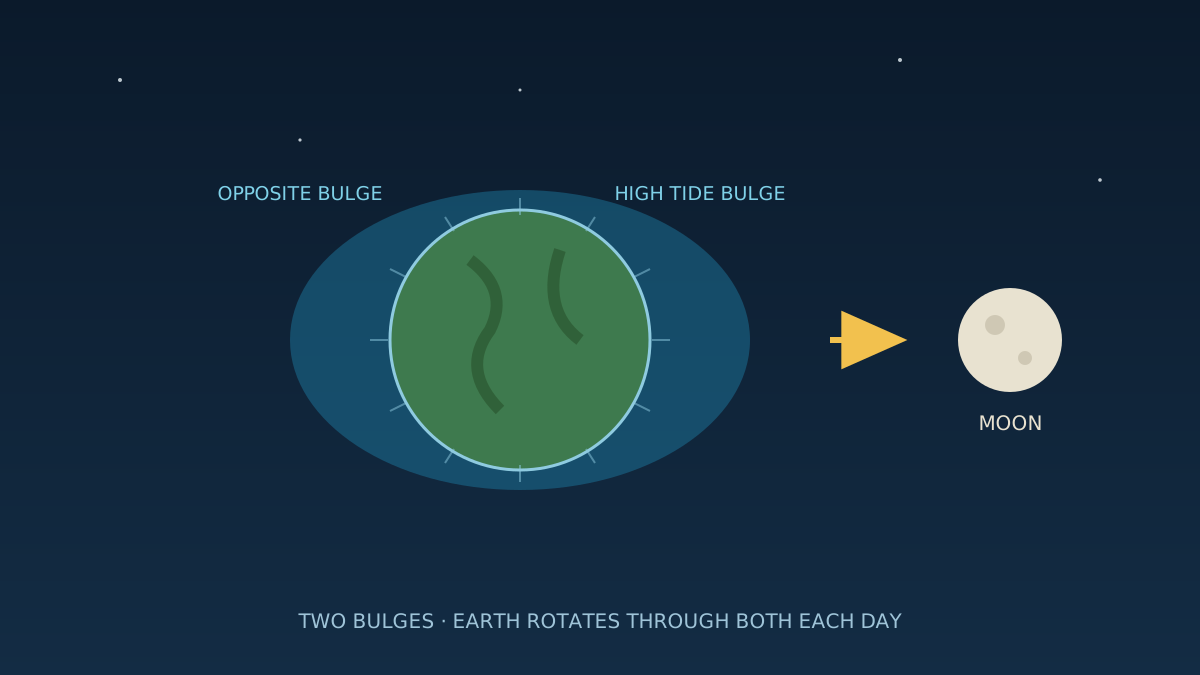
The Moon's gravity pulls hardest on the water nearest it, raising a bulge of ocean on that side of Earth. On the opposite side, the water is pulled least and effectively lags behind, forming a second bulge. Earth then rotates beneath this pair of bulges, so a coastline passes through two highs and two lows in a little over a day.
The Sun's supporting role
The Sun raises tides too — weaker ones, despite its size, because it is so far away. When Sun and Moon line up at new and full moon, their effects add and coasts get the large spring tides. When they sit at right angles, the pulls partly cancel and the gentler neap tides follow. This alternation repeats roughly every two weeks.
Why your beach is different from another
Tidal range varies enormously with geography. Wide, funnel-shaped bays amplify the rise, which is why some estuaries see ranges of many meters while some open coasts and enclosed seas barely move. The shape of the seabed, the width of the shelf and the resonance of a basin all matter more than latitude.
Reading a tide table
Tide tables list predicted heights and times for a named port, and they are predictions — strong wind and low air pressure can push real water levels above or below the forecast. Anyone walking a tidal flat, launching a boat or fishing a shoreline should read the local table, note the direction of the flow, and leave a margin.
Conclusion
Tides are astronomy you can stand in. Once the two bulges make sense, the daily rhythm of any coastline becomes readable — and considerably safer to work with.
Frequently Asked Questions
What causes tides?
Mainly the Moon's gravity, which pulls the ocean into two bulges — one facing the Moon and one on the opposite side. As Earth rotates, coasts pass through them.
Why are there two high tides a day?
Because there are two bulges. Earth turns through both roughly every 24 hours and 50 minutes, giving most coasts two highs and two lows.
What are spring and neap tides?
When Sun and Moon align, their pulls combine into large spring tides; when they sit at right angles, the pulls partly cancel into smaller neap tides.
Sources & Further Reading
Last updated: 6 August 2026