How Waves Are Born: From Distant Storms to the Beach at Your Feet
The wave that soaks your feet may have been born a week ago, in a storm you never heard about, thousands of kilometers away. Waves are the ocean's long-distance messengers, and their journey follows rules you can watch from any beach.
Wind writes the first draft
Waves begin as wind drags on water, first as ripples, then as a confused, choppy sea. Three things decide how big they grow: wind speed, how long the wind blows, and fetch — the uninterrupted distance of water it blows across. A gale over a small lake makes chop; a moderate wind over an ocean makes a swell.
The water stays; the shape travels
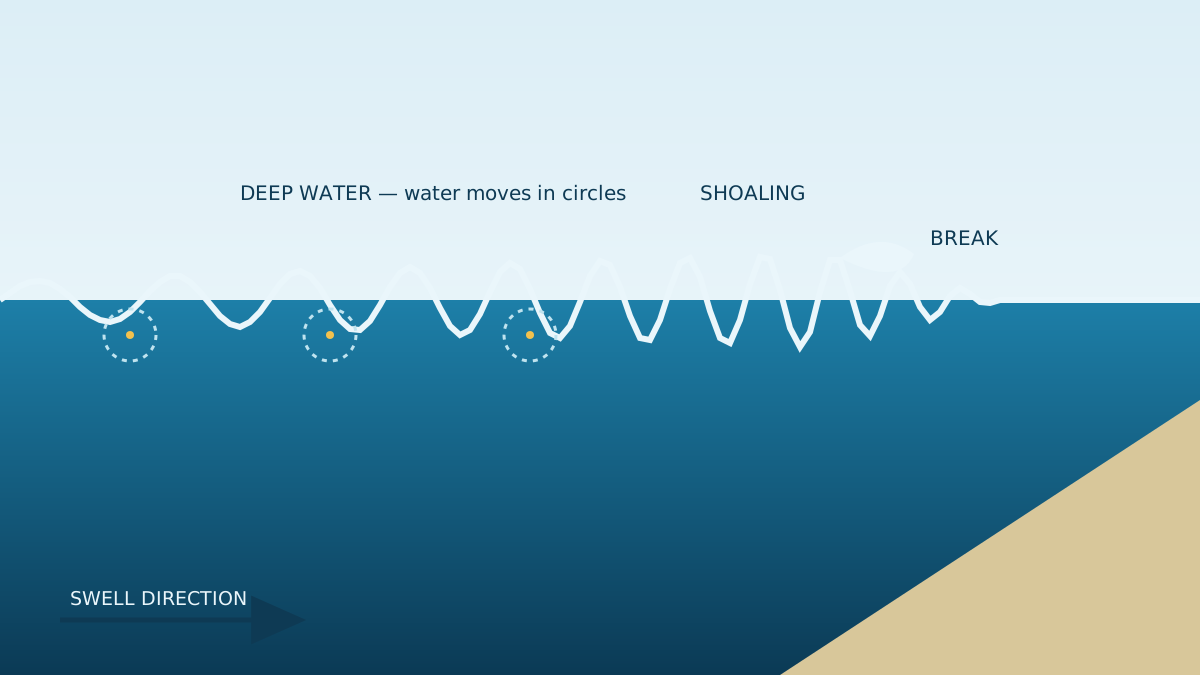
A common misunderstanding is that waves carry water toward the shore. In deep water, each particle mostly moves in a circle and returns near where it started; what travels is the energy and shape. That is why a floating gull rises and falls without being swept away — a fact worth remembering when judging what a wave will do.
Swell: the long, orderly aftermath
Once waves leave the storm, they sort themselves out. Longer waves travel faster, so the sea smooths into evenly spaced lines called swell, which can cross an ocean losing surprisingly little energy. Surf forecasters read swell height, period and direction — the period, the seconds between crests, tells you far more about a wave's power than height alone.
The last hundred meters
Near shore the seabed rises and begins to drag on the bottom of the wave. The wave slows, steepens, and finally the crest outruns its own base and topples: it breaks. Whether it spills gently or plunges violently depends mostly on the slope of the bottom, which is why one beach is a nursery for beginners and the next is not.
Conclusion
Every set that rolls in is the tail end of weather that happened somewhere else. Learn the sequence — wind, fetch, swell, break — and the beach becomes a live readout of what the ocean has been doing for the past week.
Frequently Asked Questions
What creates ocean waves?
Wind blowing across the surface. The stronger the wind, the longer it blows and the greater the distance it covers, the larger the waves it builds.
What is swell?
Waves that have left the storm that created them. They organize into long, even lines and can cross an entire ocean before reaching a coast.
Why do waves break?
In shallow water the bottom slows the base of the wave while the crest keeps moving, until the crest topples forward and breaks.
Sources & Further Reading
Last updated: 6 August 2026